
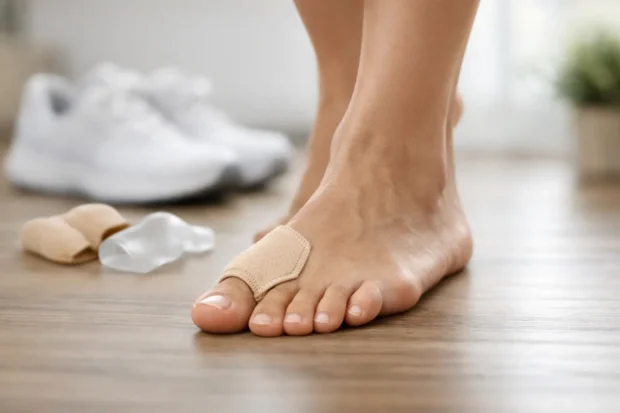
If you’ve ever peeled a gel pad off your sock at noon or felt a bunion cushion bunch up under your shoe, you already know the problem is not just cushioning. It’s staying power. A bunion cushion that stays on has to do two jobs at once: protect the sore spot from rubbing and keep its position while you walk, stand, and go about a normal day.
That sounds simple, but most bunion products fail in real life for the same reason. They were made to sit on the foot, not move with it. When your foot shifts inside a shoe, when socks create friction, or when heat and sweat build up, a basic stick-on pad can slide, fold, or peel away. The result is familiar – less comfort, more irritation, and a product you stop using because it becomes one more thing to manage.
Why most bunion cushions slide off
A bunion sits at a high-friction point on the side of the foot, right where shoes often press the hardest. That means any cushion has to hold on through repeated movement at a curved, mobile joint. Adhesive-only pads often struggle here, especially if your skin is warm, dry in spots, or treated with lotion.
Shoe shape also matters more than many people realize. A narrow toe box, a seam near the bunion, or a snug upper can push the cushion sideways with every step. Even a good pad can lose position if the shoe keeps grinding against it. This is why some people say a product worked at home but not during errands, exercise, or a long work shift.
There is also a trade-off between thickness and stability. Thicker gel cushions may feel soft at first, but they can create extra bulk inside the shoe. That added bulk increases pressure, and pressure often causes slipping. In other words, more padding is not always better if it changes how your shoe fits.
What makes a bunion cushion that stays on better
The best solution is usually not a simple adhesive dot. It is a design that anchors the cushion to your foot so it moves with you instead of fighting against your movement. That anchor can come from a sleeve, loop, wrap, or soft splint-style structure that keeps the protective area aligned over the bunion.
A thin profile is just as important as the material itself. When the cushion is slim enough to fit inside regular shoes, there is less crowding at the joint and less chance of the product being pushed out of place. For active people, that makes a huge difference. A product you can wear in walking shoes, casual sneakers, and many everyday shoes is more likely to become part of your routine.
Softness matters, but so does breathability. If a cushion traps heat and moisture, it may start to shift after an hour or two. Breathable fabrics and flexible materials tend to perform better over a full day because they are more comfortable against the skin and less likely to feel sweaty or sticky.
The difference between a pad and a wearable support
Many people start with drugstore pads because they seem easy. Peel, stick, done. That can help for occasional use, but it often falls short for people who are on their feet regularly. If you walk for exercise, work long hours standing, or just want comfort while wearing normal shoes, a wearable support is often the more dependable choice.
A wearable bunion cushion that stays on usually combines protection with gentle structure. Instead of covering only the sore spot, it helps hold the toe area in a more natural position while reducing rubbing at the joint. That does not mean it is a corrective medical treatment, and results vary by foot shape and shoe type. It does mean the product may feel more stable because it is designed around how the foot moves.
This is where ultra-thin bunion bootie-style designs stand out. Rather than relying on sticky backing, they use a soft, flexible fit to stay in place through walking and standing. For many people, that solves the biggest complaint in this category: comfort products that work for 20 minutes, then shift the second real life starts.
How to choose the right bunion cushion for daily wear
Start with your routine, not the packaging. If you mostly need relief while relaxing at home, a basic cushion might be enough. If your pain point is friction during errands, work, exercise, or social outings, look for something made to fit inside shoes without adding obvious bulk.
Pay close attention to how the product stays on. Adhesive is not always bad, but it is rarely the most reliable option for active use. A foot-hugging design usually holds up better over time because it does not depend on skin tackiness alone.
Sizing also deserves more attention than shoppers often give it. If the product is too loose, it can slide. If it is too tight, it can create pressure and make the bunion feel worse. A brand that offers clear sizing help or size exchanges is often a safer bet, especially if you have tried generic one-size-fits-all options before and felt disappointed.
Material feel matters too. Look for soft, breathable, flexible construction that will not make your shoe tighter than necessary. If you have sensitive skin, post-surgical tenderness, or irritation from rubbing, the fabric against the bunion can be just as important as the cushion itself.
When a bunion cushion that stays on is worth it
If your main issue is shoe rubbing, the right cushion can make everyday movement more manageable. It can help reduce friction, make walking more comfortable, and remove some of the dread that comes with putting on shoes you used to tolerate just fine.
It is also useful for people who are not ready for rigid splints or who have already tried them and gave up. A lot of traditional bunion gear is too bulky for daytime wear. That creates an all-too-common pattern: use it at night for a while, stop using it, and get little practical benefit during the hours you actually need support. A thin, wearable option is often more realistic because consistency is easier when the product fits normal life.
For some people, especially those with more advanced bunions or significant structural changes, a cushion alone may not be enough. It can still help with comfort and friction, but it may not address every issue you feel during walking. That is where expectations matter. A good bunion cushion supports comfort, reduces rubbing, and may encourage better positioning. It is not a substitute for personalized medical guidance if your pain is severe or worsening.
Small changes that help any bunion cushion work better
Even the best product performs better when your shoes support it. A wider toe box reduces pressure on the bunion and lowers the chance that the cushion will shift. Socks can help too, especially if they are smooth and not overly bulky.
If you use a balm or moisturizer around the foot, give it time to absorb before putting on the cushion. Slippery skin makes most products less stable. And if a product feels off from the start, do not assume you need to break it in for weeks. Poor fit usually stays poor.
One reason many people respond well to products like Bunion Bootie is that they were designed around this exact frustration – not just bunion discomfort, but the annoyance of products that are too thick, too rigid, or too impractical to wear in real shoes. When comfort and wearability come together, people are much more likely to keep using the support they bought.
What to expect from a good fit
A well-fitting bunion cushion should feel secure without demanding constant adjustment. You should not be thinking about it every few minutes. It should reduce rubbing at the bunion, feel soft inside the shoe, and stay aligned during normal movement.
That does not mean every shoe will feel the same. Dress shoes with a tapered front may still be challenging, even with a thin product. Walking shoes and roomier everyday styles usually give better results. It depends on how much pressure the shoe puts on the bunion area and how much space the forefoot has to begin with.
The goal is not perfection in every pair you own. The goal is finding a realistic support you can wear often enough to make daily life easier. For most people, that means choosing a bunion cushion that stays on because it is designed to move with the foot, not because it sticks harder.
If you have been cycling through pads that peel, bunch, or disappear halfway through the day, that is not you being difficult. It is a sign that wearability matters just as much as cushioning, and the right design can finally make comfort feel dependable.