
Shoe Lacing 101 – Lacing Techniques for Bunions and Other Foot Issues
Sometimes a small change in how you lace your shoes can make a surprisingly big difference in how they feel.
If you have a bunion or bunionette, pressure from the upper of a running shoe, walking shoe, hiking boot or even a work boot can create rubbing and irritation right where you least want it. Changing the way your shoe is laced can help create a little more room around the forefoot while still keeping the shoe secure.
Of course, lacing can’t change the structure of a bunion, and it won’t make a shoe that’s simply too narrow suddenly fit. Start with footwear that gives your toes adequate room, then experiment with these lacing techniques to reduce unnecessary pressure.
Tip: Longer shoelaces can be helpful with many of these techniques. If you find yourself pulling the laces overly tight just to get enough length to tie them, try a longer pair.
1. Bunion Step-Over Lacing
This is one of our favorite lacing techniques for bunions and bunionettes because it targets the area where many people need relief most: the side of the forefoot.
Rather than pulling the shoe upper tightly across the bunion, leave the eyelet closest to the problem area unused and “step over” it with the lace. Continue your normal crisscross pattern above that point.
The goal is simple: less lace tension directly over the bunion while keeping the rest of the shoe comfortably secure.
This technique can work well with running shoes, walking shoes, hiking boots and other lace-up footwear.

2. Straight Lacing Technique for Wide Feet
If traditional crisscross lacing feels too snug across the top of your foot, straight lacing — sometimes called parallel lacing — can distribute tension differently across the shoe.
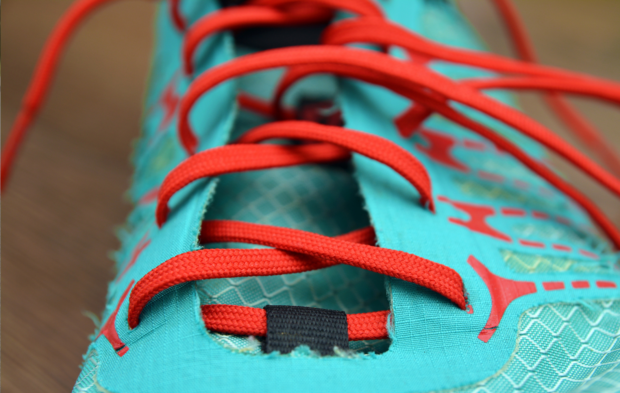
Instead of creating repeated X’s across the top of your foot, the laces run more horizontally from side to side.
This can be especially helpful if you have a wider foot or simply find that standard lacing creates uncomfortable pressure across the top of your shoe.

(Photo Courtesy of Carolee Belkin Walker)
3. Gap Lacing Technique for High Arches
Gap lacing is one of the easiest techniques to customize because you can create extra room exactly where you need it.
Begin lacing your shoes normally. When you reach an area where the shoe feels tight or creates a pressure point, run the lace vertically up the same side instead of crossing it over the foot. Then resume your normal crisscross pattern above the sensitive area.
This creates a small “window” or gap in the lacing and reduces downward pressure over that particular spot.
Gap lacing can be useful for people with high arches, wide feet, bunions, bunionettes or other areas that become irritated by the shoe upper.

(Photo Courtesy of Carolee Belkin Walker)
4. Skip Lacing Technique
If your forefoot needs more space, try skipping one or more of the lower eyelets instead of tightening every section of the shoe equally.
Leaving those lower eyelets unused reduces lace tension across the widest part of the foot and can give the forefoot and toes a little more room to spread.
Once you reach the midfoot, resume your normal crisscross lacing so the shoe still feels secure.
The important part is finding the right balance: the forefoot should feel comfortable rather than compressed, but your foot shouldn’t be sliding around inside the shoe.

(Photo Courtesy of Carolee Belkin Walker)
One More Tip: Don’t Overtighten the Whole Shoe
People with bunions often loosen the entire shoe trying to create more room in front. That can solve one problem while creating another — especially if the heel begins slipping.
Instead, think of your shoe in sections. Keep the forefoot comfortably relaxed while using the upper eyelets to secure the midfoot and heel.
If heel slippage is an issue for you, we cover the Loop Lock (Runner’s Loop) along with several additional techniques in Part 2: Lacing Running Shoes With Bunions & Other Foot Issues.
Small Changes Can Make Shoes Much More Comfortable
The best lacing technique is the one that removes pressure from your problem area without making the rest of the shoe unstable. Experiment with the patterns above — you may find that changing just one or two eyelets makes your favorite pair of shoes considerably more comfortable.
And remember: lacing is only part of the equation. A shoe with enough room in the toe box is still important when you’re dealing with a bunion or bunionette.
Ready for a few more options? Continue to Part 2: Lacing Running Shoes With Bunions & Other Foot Issues, where we cover wide-foot lacing, side lacing and the Loop Lock technique for keeping the heel secure.
And if rubbing between your bunion and your shoe is the bigger issue, Bunion Bootie creates an ultra-thin, soft barrier designed to fit inside most shoes without adding the bulk of a traditional bunion splint.