
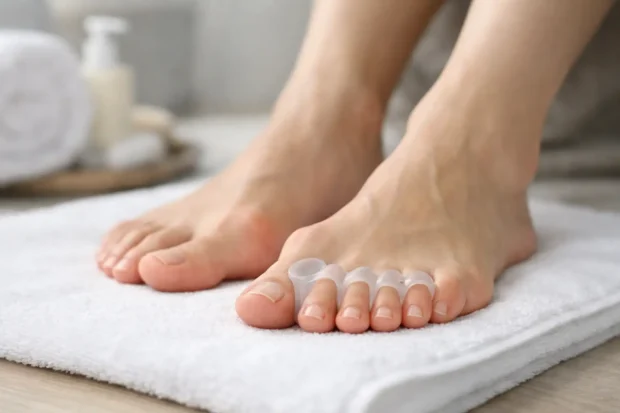
If you have ever put on a bulky bunion splint, taken three steps, and thought, I cannot wear this anywhere, you are not alone. Many people looking for a toe separator for bunions are not asking for a miracle. They want something that eases rubbing, feels tolerable inside shoes, and helps them stay active without turning daily life into a foot-care project.
That is where the conversation gets more useful. A toe separator can help some people with bunion discomfort, but the real question is how it works in actual life – while walking, working, exercising, and standing for long stretches. The best option is not always the one that looks the most corrective. Often, it is the one you will actually wear consistently.
What a toe separator for bunions actually does
A bunion develops when the big toe starts drifting toward the second toe and the joint at the base of the big toe becomes more prominent. That change can create pressure, rubbing, and a feeling that your shoe is always hitting the same sore spot.
A toe separator for bunions is designed to create space between the big toe and second toe. In simple terms, it encourages a more natural toe position and may reduce skin-on-skin friction. For some people, that spacing can also ease pressure at the joint enough to make walking feel more comfortable.
What it does not do is erase a bunion overnight or permanently reverse a structural deformity on its own. That matters, because a lot of frustration starts with unrealistic expectations. Toe separators are better understood as comfort and support tools, not instant fixes.
Why some people love them and others give up fast
The biggest advantage of toe separators is straightforward: they can reduce crowding. If your big toe presses hard against the second toe, a separator may relieve some of that compression and reduce irritation in that area.
But there is a trade-off. Many separators are too thick for regular shoes. They may feel fine while sitting on the couch or walking barefoot at home, then become uncomfortable the minute you slide into sneakers, flats, or work shoes. That is often why people say they tried one and it did nothing. Sometimes the issue is not the concept. It is the design.
Rigid or overly wide products can also create new pressure points. If a separator forces the toes apart more than your foot comfortably tolerates, it can feel unnatural fast. People with sensitive feet, overlapping toes, post-surgical tenderness, or a more advanced bunion often notice this right away.
That is why wearability matters as much as alignment support. If a product only works in theory, but not in your actual routine, the benefit is limited.
When a toe separator makes sense
A toe separator tends to be most helpful when your main issues are toe crowding, friction between the toes, and mild to moderate discomfort from the big toe drifting inward. It can also be useful if you notice that your pain gets worse in narrower shoes or after long periods on your feet.
Some people use one after bunion surgery, but that depends on their surgeon’s guidance and where they are in recovery. Others use a separator preventively because they feel pressure building at the joint and want gentler support before things worsen.
If your goal is everyday comfort, the best candidate is usually someone who wants conservative support they can use regularly – not just for 20 minutes at night.
When it may not be enough on its own
There are cases where a toe separator helps, but only as part of a bigger comfort plan. If the bunion joint itself is rubbing against the shoe, spacing the toes may not fully solve that outer-side pressure. If your shoes are tight through the toe box, even a good separator can only do so much.
You may also need a different approach if your biggest problem is not toe crowding, but direct friction over the bunion bump. In that case, a soft, thin bunion corrector or sleeve that cushions the joint and supports alignment during movement may be a better fit than a stand-alone spacer.
This is where many shoppers get stuck. They buy a product meant for toe spacing when what they really need is less rubbing at the side of the foot inside shoes.
The difference between a spacer and a wearable bunion corrector
A basic toe separator usually sits between the first and second toes. Its job is narrow and specific. It creates space.
A wearable bunion corrector does a bit more. Depending on the design, it may help reduce friction at the bunion site, offer gentle alignment support, and stay in place inside footwear. For active people, that difference is not minor. It can be the deciding factor between something you use once in a while and something that becomes part of your daily comfort routine.
Thin, flexible designs tend to work better for daytime use because they adapt to movement instead of fighting it. That is especially important if you walk often, work on your feet, or simply do not want to change shoes, socks, and habits just to accommodate a foot product.
Bunion Bootie built its reputation around that exact gap in the market – giving people a softer, shoe-friendly option when traditional bunion gear feels too bulky, too rigid, or too unrealistic for real life.
What to look for before you buy
If you are considering a toe separator for bunions, think beyond the product photo. The real test is whether it fits your routine.
Start with thickness. If it looks substantial, ask yourself what shoes you plan to wear it with. A separator that works barefoot but not in shoes may still be useful at home, but it will not help much during the hours when your feet are under the most pressure.
Material matters too. Soft, flexible materials usually feel better for longer wear than firm gel or hard silicone. Breathability can also make a difference, especially if you are wearing the product through the day.
Fit and staying power are often overlooked. If it slides out of place, bunches, or creates rubbing between the toes, it can become one more irritation instead of a solution. And if you have a prominent bunion bump, consider whether the product addresses that area or only the space between the toes.
How to use one without making your feet angrier
Start slowly. Even a gentle separator can feel strange if your toes have been crowded for years. Wear it for short periods first and build up based on comfort.
Use it with shoes that have enough room in the toe box. This is one of the most common make-or-break issues. A supportive product cannot do its job if your footwear is compressing the toes right back together.
Pay attention to your specific discomfort. If the separator eases pressure between the toes but the bunion joint still rubs, that is useful information. It means you may need a product that protects the bunion site itself, not just one that separates the toes.
And if you feel sharp pain, numbness, or increased irritation, stop using it. More correction is not always better. Comfort products should help your feet feel more manageable, not less.
So, is a toe separator for bunions worth trying?
For the right person, yes. A toe separator can be a simple, non-invasive way to reduce toe crowding and improve comfort. But it is not automatically the best answer for every bunion.
If your daily problem is friction against shoes, pressure on the side of the joint, or the fact that most bunion products are too bulky to wear outside the house, a thinner and more wearable support may make more sense. The best bunion solution is usually not the most aggressive one. It is the one that fits your body, your shoes, and your life well enough to use consistently.
Your feet do a lot for you every day. They deserve support that works with real movement, not against it.